Posted on
July 15, 2026
by
Trevor Roszell
Summer often brings thoughts of vacations, road trips, and exploring somewhere new. But not every year includes a plane ticket or a week away—and that's perfectly okay.
Thanks to today's technology, you can visit some of the world's most incredible destinations without leaving your living room. From breathtaking landscapes and bustling cities to wildlife sanctuaries and underwater adventures, live webcams and virtual tours offer an easy way to experience the world from home.
Whether you're looking for a relaxing evening activity, something fun to do with the grandchildren, or simply want to explore places you've always dreamed of visiting, there's something on this list for everyone.
Visit Famous Destinations in Real Time
One of the best parts about live webcams is that you're watching the world as it happens.
You can experience iconic landmarks, busy city streets, beautiful coastlines, and scenic mountain views from almost anywhere on the planet.
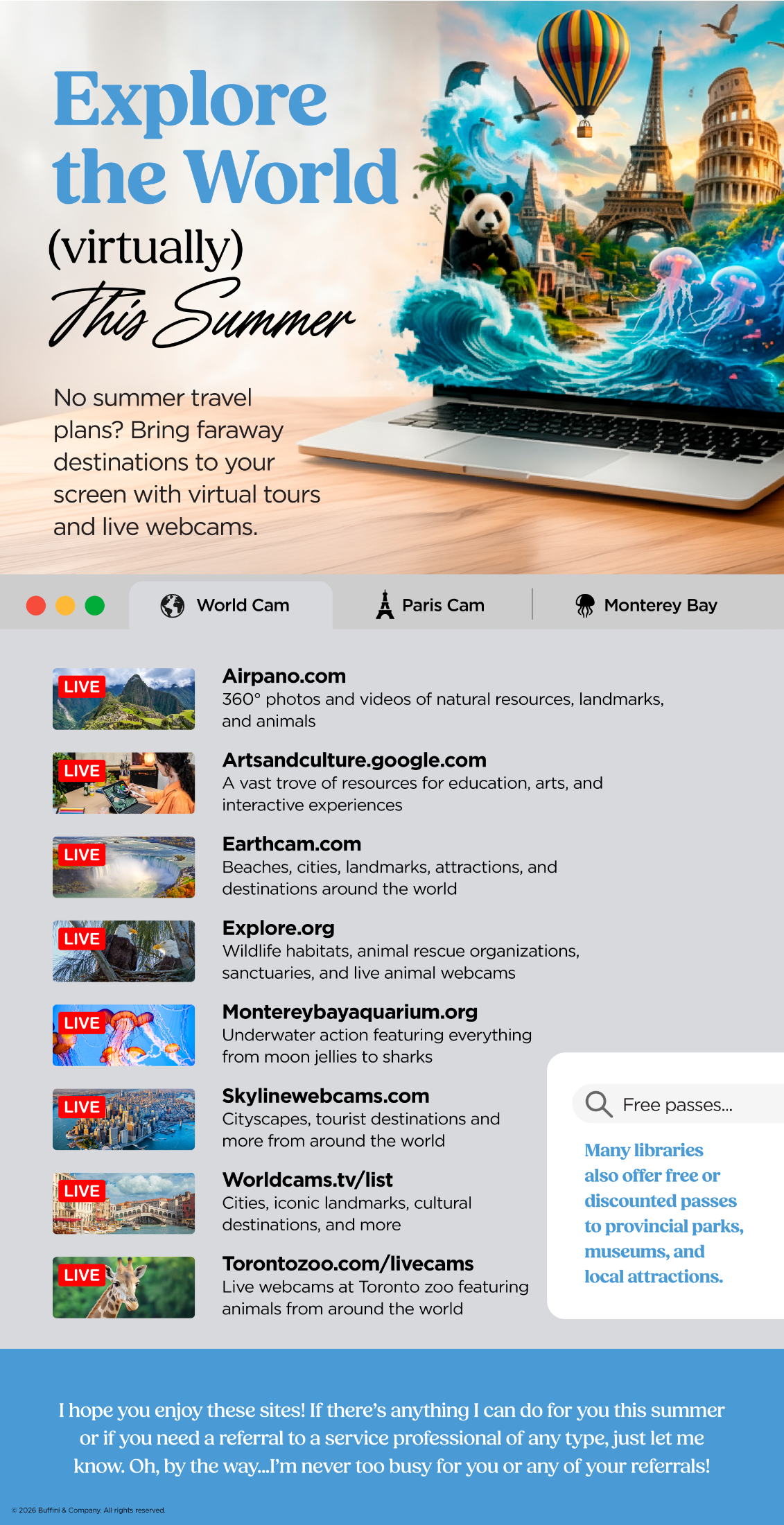
Some of the featured websites include:
AirPano – Stunning 360° aerial photography, videos, and virtual tours of natural wonders and famous landmarks.
EarthCam – Live cameras from cities, beaches, tourist attractions, and destinations across the globe.
SkylineWebcams – Real-time views of popular travel destinations and world-famous landmarks.
WorldCams – Hundreds of live webcams featuring cities, cultural attractions, and beautiful landscapes.
It's a great reminder that the world is always moving—even when you're enjoying a quiet day at home.
Experience Wildlife Up Close
Nature lovers have more opportunities than ever to observe animals in their natural habitats.
Watch bears fishing for salmon, eagles caring for their young, giraffes wandering across exhibits, or jellyfish gracefully floating through aquarium displays.
Some favourites include:
Explore.org – Live wildlife cameras from conservation organizations and sanctuaries around the world.
Monterey Bay Aquarium Live Cams – Underwater views featuring sea otters, sharks, moon jellies, penguins, and more.
Toronto Zoo Live Cams – Watch a variety of animals from one of Canada's most popular zoos.
These livestreams are peaceful, educational, and surprisingly relaxing.
Discover Art, Culture, and History
Travel isn't only about scenery—it's also about experiencing different cultures.
Google Arts & Culture offers virtual access to museums, galleries, historical landmarks, and cultural exhibits from around the world.
You can wander through famous museums, explore historical sites, and learn something new without ever standing in line.
It's a fantastic resource for lifelong learners, families, and anyone who enjoys discovering new places.
A Great Activity for the Whole Family
Virtual travel isn't just entertaining—it's also educational.
Parents and grandparents can introduce children to different countries, wildlife, and cultures while encouraging curiosity about the world around them.
It also provides a wonderful way to spend a rainy afternoon or a relaxing evening without leaving home.
Sometimes the Best Adventures Start With Curiosity
I've always believed that providing value goes beyond helping people buy and sell homes.
Sometimes it's sharing useful resources, local recommendations, or ideas that simply make life a little more enjoyable.
I hope these virtual travel experiences inspire you to explore somewhere new this summer—even if it's from the comfort of your favourite chair.
And if there's ever anything I can help you with—whether it's real estate advice, a recommendation for a trusted local professional, or simply answering a question—please don't hesitate to reach out.
I'd love to help.
Trevor Roszell
I'm never too busy for your referrals.